

Understanding the Average Trekking Kilimanjaro Price
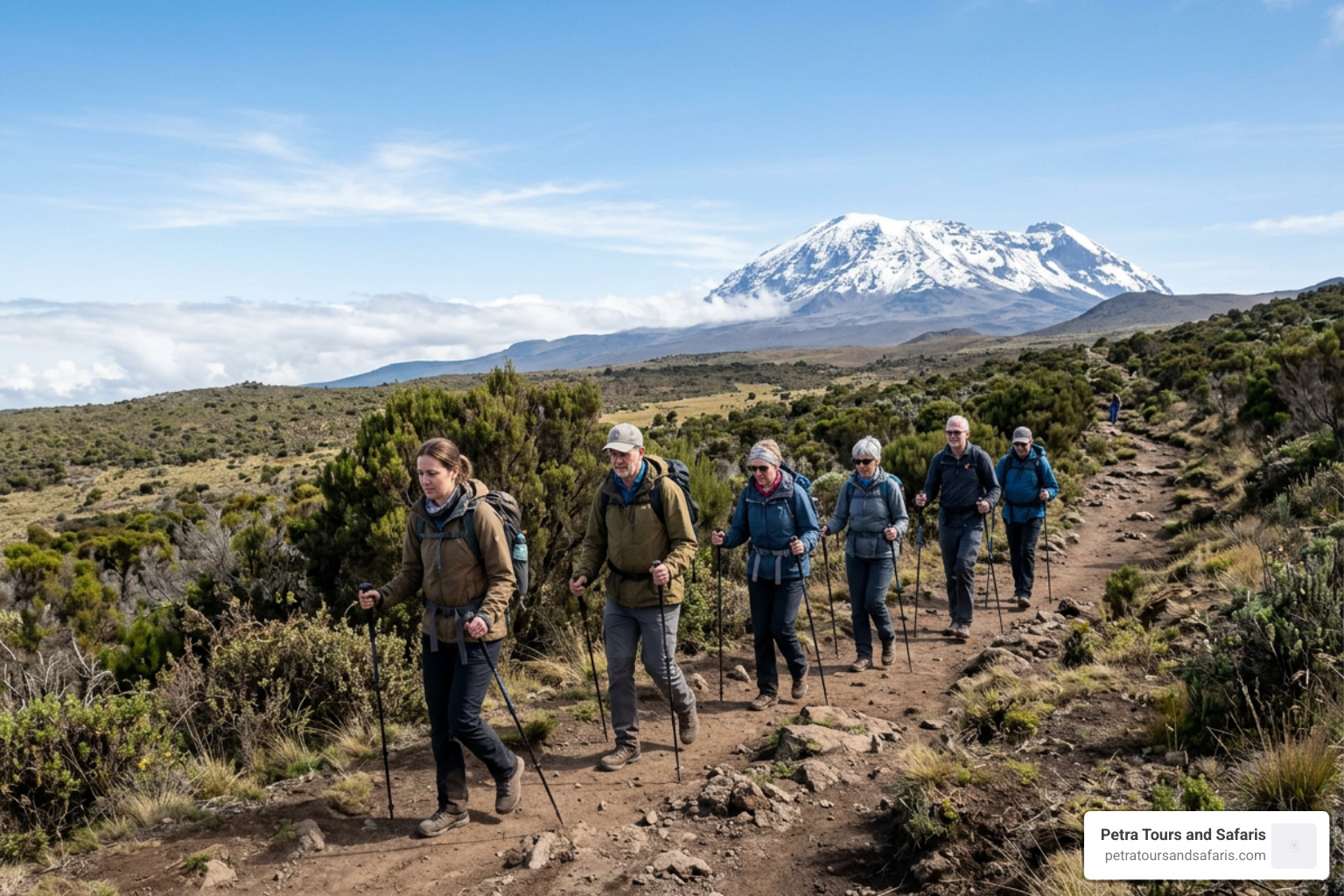
When you start researching your expedition to the “Roof of Africa,” the broad spectrum of prices can feel dizzying. You will encounter promotional packages under $1,500 alongside high-end luxury expeditions charging upwards of $6,000. Understanding why this gap exists is essential for making an informed decision that protects your safety, comfort, and summit chances.
Every climb of Mount Kilimanjaro requires an organized support team. Unlike self-guided trails around the world, Tanzania National Parks Authority (TANAPA) mandates that all climbers must be accompanied by licensed local guides. Behind every single hiker stands an entire mobile support system: mountain guides, camp chefs, and multiple porters carrying food, clean water, shelter, medical equipment, and personal duffel bags.
Because Kilimanjaro logistics are labor- and fee-intensive, a baseline operational cost exists for every climb. When prices deviate wildly from the industry average, it reflects differences in group sizes, equipment quality, safety gear, acclimatization schedules, and crew welfare standards.
Comparing Trekking Kilimanjaro Price Ranges by Tier
To compare options accurately, packages are generally divided into three main service tiers: budget, midrange, and luxury.
- Budget Tier ($1,500 – $2,000): Operators in this tier focus on keeping retail prices as low as possible. They often operate large, fixed-departure groups, use basic or heavily worn camping equipment, provide simple carbohydrate-heavy rations, and may carry minimal medical gear. Critically, deep discounts in this tier frequently come at the expense of porter compensation and safety oversight.
- Midrange Tier ($2,200 – $3,600): This is the sweet spot for most independent climbers seeking a balance of safety, high summit success rates, and ethical operations. Midrange packages feature quality four-season all-weather tents, nutritious chef-prepared meals with fresh produce, certified Wilderness First Responder (WFR) guides, pulse oximeters, emergency oxygen, and fair crew compensation.
- Luxury Tier ($4,000 – $7,000+): Luxury packages offer premium creature comforts on the mountain. These include walk-in sleeping tents with raised camp cots, heated dining tents, portable private toilet tents with flush mechanisms, hot showers, specialized catering, and private climbing doctors or expanded guide-to-client ratios.
| Package Tier | Average Price Range | Typical Route Duration | Crew-to-Client Ratio | Safety Equipment Included | Tent & Gear Standard |
|---|---|---|---|---|---|
| Budget | $1,500 – $2,000 | 5 – 6 Days | 2:1 to 3:1 | Basic first aid kit (often limited) | Standard 2-person tents, older equipment |
| Midrange | $2,200 – $3,600 | 7 – 8 Days | 4:1 to 5:1 | Emergency O2, pulse oximeter, WFR kit | Rugged 4-season mountain tents, mess tent |
| Luxury | $4,000 – $7,000+ | 7 – 9 Days | 5:1 to 7:1 | Hyperbaric chamber, full O2, medical crew | Walk-in tents, cots, private chemical toilets |
What Is Included in a Standard Package
A professional Kilimanjaro package operates as an all-inclusive mountain expedition. When evaluating a quote, verify that the following core components are included:
- All National Park Entry and Conservation Fees: Government-regulated daily fees paid directly to TANAPA.
- Camping or Hut Fees: Official overnight site usage fees across all mountain camps.
- Mandatory Rescue Fees: National park rescue service registration.
- Mountain Crew Support: Licensed lead guides, assistant guides, camp cooks, and porters.
- Expedition Equipment: Four-season sleeping tents, all-weather mess/dining tents, camp tables, chairs, and cooking gear.
- Three Nutritious Meals Daily: High-calorie, chef-prepared hot breakfasts, lunches, and dinners, plus boiled and purified drinking water.
- Safety and Medical Monitoring: Twice-daily biometric health checks (pulse oximetry and heart rate), supplemental oxygen cylinders, and emergency response plans.
- Ground Transfers: Airport transfers and round-trip transport between your base hotel in Moshi or Arusha and the mountain gates.
Major Cost Breakdown: Where Your Money Actually Goes
Many travelers wonder why trekking Kilimanjaro costs substantially more than high-altitude treks in Nepal or South America. The answer lies in the fixed regulatory fee structure and the sheer scale of the logistical support crew required on an isolated volcanic peak.
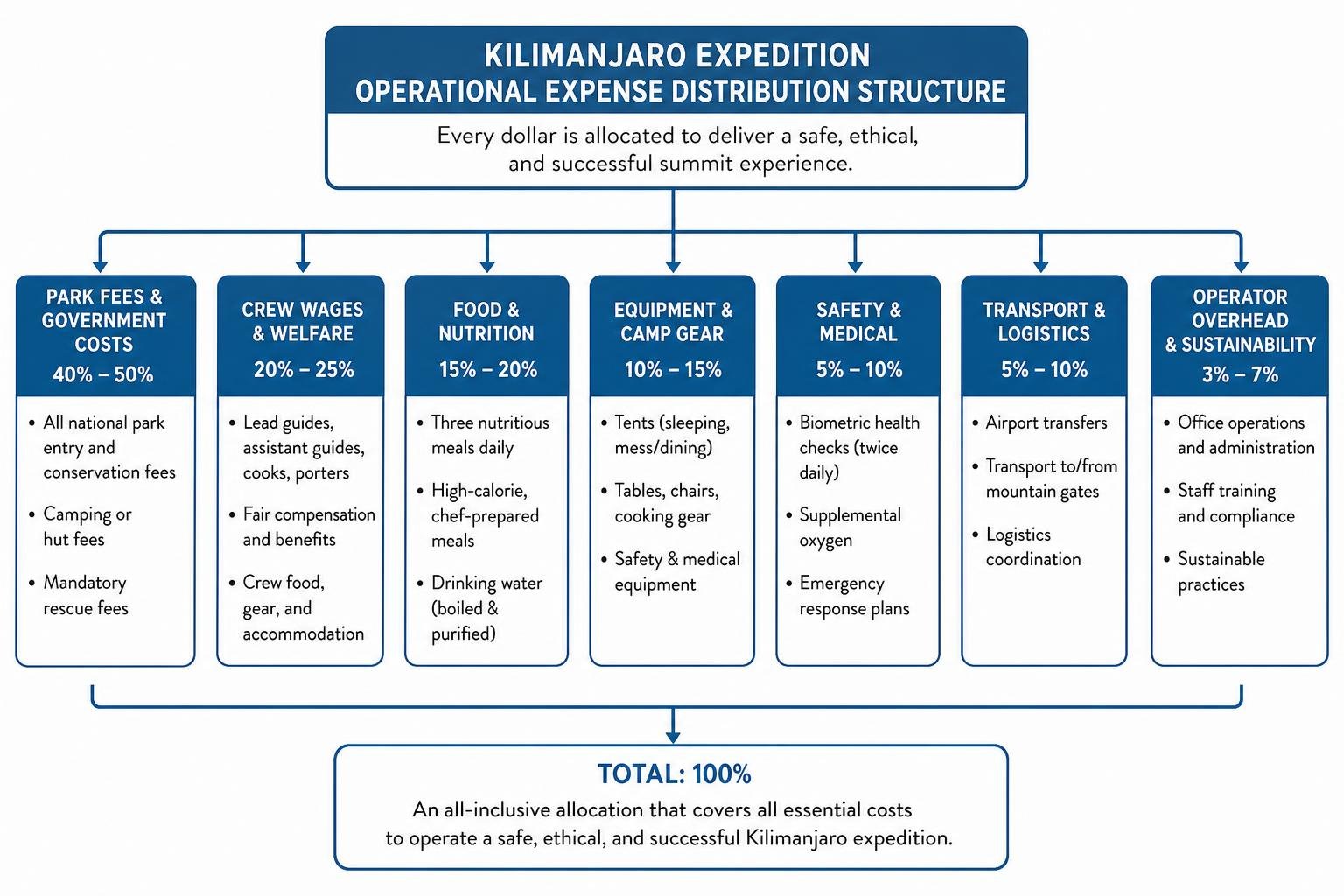
Mandatory Park and Conservation Fees
A significant portion of your total payment never stays with your tour operator; it goes straight to the Tanzanian government to support the conservation of Mount Kilimanjaro National Park.
For a standard 7-day camping climb, mandatory statutory costs per climber typically include:
- Conservation Fees: Approximately $70 to $80 per day ($490–$560 total).
- Camping Fees: Approximately $50 to $60 per night ($300–$360 total). (Hut fees on the Marangu route run around $60 per night).
- Rescue Fees: A flat fee of $20 per trekker per climb.
- Crew Park Entry Fees: Daily park entrance fees for each guide, cook, and porter supporting your trek.
- Value Added Tax (VAT): An 18% government tax applied across all park, conservation, and service fees.
Altogether, mandatory taxes and park fees alone account for roughly $1,000 to $1,300 per climber before a single plate of food is cooked or a single guide is paid.
Crew Wages, Fair Treatment, and Tipping
Trekking Kilimanjaro is fundamentally a team sport. Because no pack animals (like mules or yaks) are permitted on Mount Kilimanjaro, human effort moves every tent, cooking stove, food crate, and piece of personal luggage up the mountain.
A single solo climber typically requires a team of four to five crew members (one lead guide, one cook, and three to four porters). A party of four climbers requires an expedition team of roughly 12 to 16 people.
Ethical operators adhere strictly to fair treatment protocols, ensuring that porters receive legitimate wages, three adequate meals a day, proper shelter, load weight limits capped at 20kg (44 lbs), and access to medical care if they fall ill. Underpriced operators often balance their margins by underpaying porters or cutting meal rations.
Crew Tipping Expectations: In Tanzania, tipping is a deeply ingrained cultural tradition that rewards your crew for their demanding physical labor. Tips should be budgeted as a separate, mandatory operational cost, calculated per group and distributed directly to the team at the final mountain camp.
- Lead Guide: $20 – $25 per day from the whole group
- Assistant Guide: $15 – $20 per day from the whole group
- Expedition Cook: $12 – $15 per day from the whole group
- Porters: $8 – $10 per day per porter from the whole group
For an average 7-day climb, plan to set aside roughly $250 to $350 per climber for crew tips.
Route Duration and Hidden Costs to Plan For
Your choice of trail, expedition duration, and travel logistics significantly impacts the overall cost of climbing Kilimanjaro.
Route Selection and Its Impact on Trekking Kilimanjaro Price
Kilimanjaro offers several distinct ascent routes, each with unique terrain, scenic beauty, logistical demands, and acclimatization profiles:
- Machame Route (6–7 Days): Highly popular and cost-efficient. It features excellent “climb high, sleep low” topography, providing high summit success rates at a moderate price.
- Lemosho Route (7–8 Days): Widely regarded as the most scenic trail. It approaches from the western side of the mountain through pristine rainforest. The longer 8-day profile yields exceptional summit success, though higher gate transport costs and additional days make it slightly pricier than Machame.
- Marangu Route (5–6 Days): The only trail featuring communal sleeping huts rather than wilderness camping. While advertised as an affordable option, the short 5-day itinerary has lower summit rates due to rapid altitude gain.
- Northern Circuit (8–9 Days): The longest and quietest route, circling the remote northern slopes. It carries the highest base package cost due to its 9-day duration, but it boasts the highest summit success rate (exceeding 95%).
- Rongai Route (6–7 Days): Approaches from the dry northern border near Kenya. It provides a gentler ascent profile and lower rainfall, making it ideal during wetter months.
When comparing prices across routes, prioritize acclimatization over short-term savings. Extending your itinerary by a single day adds park and operational costs, but clinical studies on high-altitude acclimatization demonstrate that gradual ascent significantly mitigates acute mountain sickness (AMS) and maximizes physical adaptation.
Unavoidable Additional and Incidental Expenses
To establish an accurate total budget, account for all incidental costs leading up to your arrival in Tanzania:
- International Airfare: Flights into Kilimanjaro International Airport (JRO) generally range from $900 to $1,800 depending on your departure city and booking lead time.
- Tanzanian Tourist Visa: $50 for most nationalities; $100 for US citizens.
- High-Altitude Travel Insurance: Specialized medical and emergency evacuation insurance covering trekking up to 6,000 meters ($100–$250).
- Specialized Gear and Rental: High-grade 0°F (-18°C) sleeping bags, trekking poles, thermal base layers, and waterproof outer shells ($150–$400 if renting or purchasing new gear).
- Pre- and Post-Trek Accommodation: Comfortable lodge stays before and after the climb ($80–$250 per night).
- Vaccinations and Travel Medications: Yellow fever vaccines (if applicable), malaria prophylaxis, and altitude medications like Diamox ($50–$150).
How to Choose a Reputable Operator for Maximum Value
Balancing safety, ethical treatment, and price requires evaluating potential operators across several practical indicators.

Timing Your Climb: High Season vs Low Season
Tanzania’s weather plays a direct role in trail conditions, visibility, and expedition pricing.
- Primary Dry Season (July to October): Offers the most stable weather, clear skies, and minimal rainfall. This is peak climbing season; operators rarely discount rates because park fees and vehicle logistics remain fixed.
- Secondary Dry Season (Late December to Early March): Warmer temperatures with clear mornings and occasional afternoon cloud cover. Excellent climbing conditions, particularly around the Christmas and New Year holidays.
- Green Seasons / Shoulder Months (April–May and November): The “long rains” fall in April and May, while November brings the “short rains.” Some operators offer modest package discounts during these shoulder periods. However, wet trails, slippery rocks, and low summit visibility make green-season climbs suitable primarily for experienced hikers.
Identifying Safe and Trustworthy Tour Providers
When vetting a trekking company, prioritize transparency, established safety protocols, and operational integrity:
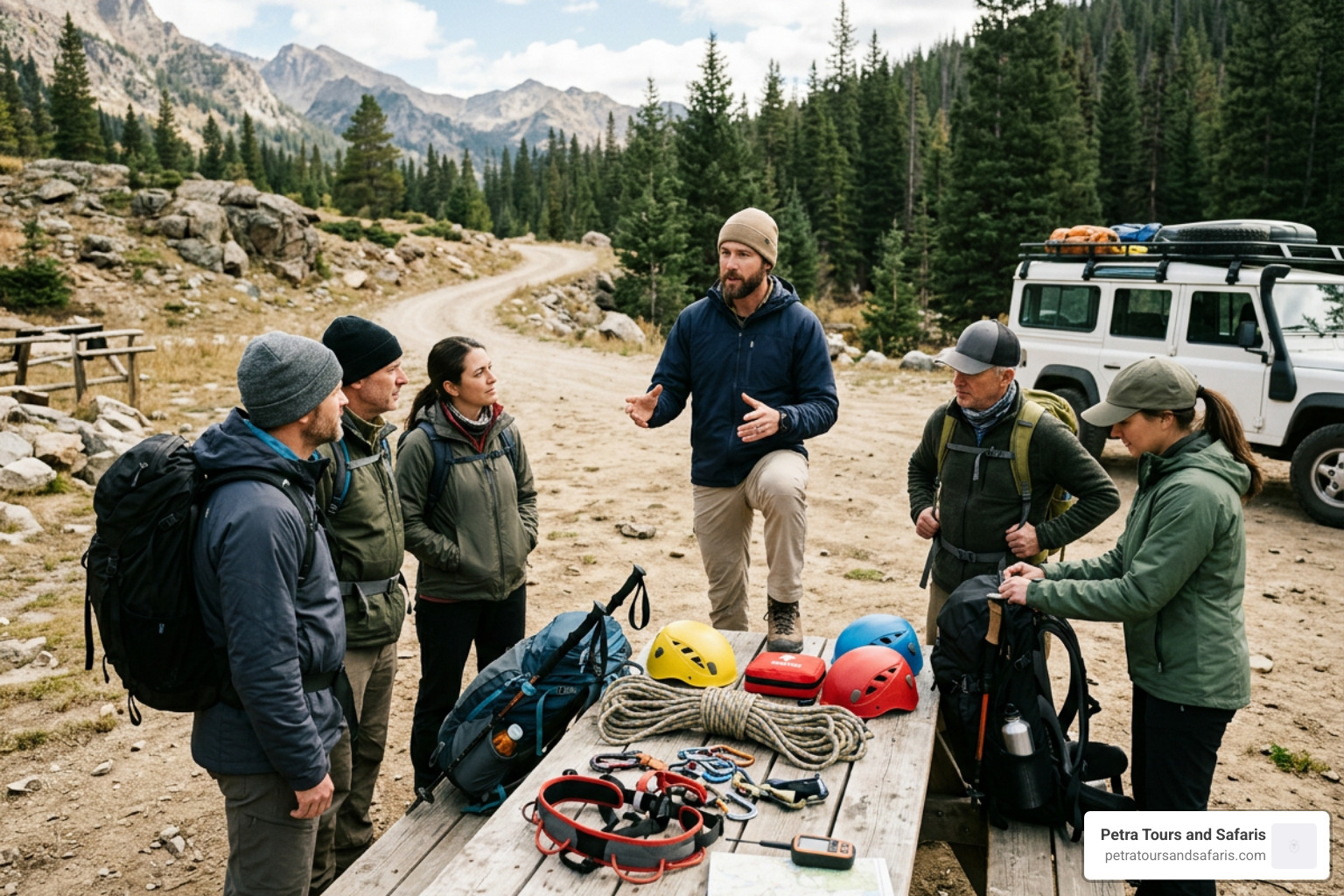
- Certified Medical Expertise: Inquire about guide certifications. Are lead guides certified Wilderness First Responders (WFR)? Do they carry medical-grade oxygen cylinders, non-rebreather masks, pulse oximeters, and stretcher evacuation gear on every trek?
- Transparent Inclusions and Transparent Pricing: A reputable operator provides an itemized list of inclusions without hiding entry fees, crater camping surcharges, or VAT taxes.
- Guide-to-Climber Ratios: Ensure your expedition maintains a minimum ratio of one certified guide for every two to three climbers on summit night to allow for individual pacing and emergency descents.
- Locally Rooted Operations: Companies that manage their own local ground operations, vehicles, and direct mountain staff maintain tighter control over safety standards and deliver superior value compared to third-party travel agencies that subcontract your climb.
Frequently Asked Questions About Kilimanjaro Costs
What is the absolute minimum cost to climb Kilimanjaro safely?
The absolute minimum safe price for a 6- or 7-day Kilimanjaro climb is roughly $2,000 to $2,200 per person in a small group setting. Because mandatory park fees, government VAT, and baseline logistics consume approximately $1,100 to $1,300 per trekker, any package priced below this threshold compromises essential safety gear, guide-to-client ratios, food quality, or fair porter compensation.
How does the cost of Kilimanjaro compare to other major global treks?
Kilimanjaro is structured differently from teahouse treks like Everest Base Camp (EBC) or the Annapurna Circuit in Nepal, where independent lodges provide cheap food and basic shelter along the trail.
- Kilimanjaro (Tanzania): Complete wilderness camping requiring a private mobile support crew of guides, cooks, and porters, plus high daily national park fees ($2,000–$4,500 for 7–8 days).
- Everest Base Camp (Nepal): Teahouse-based trekking with lower daily permit fees and smaller support crews ($1,500–$3,000 for 12–14 days, excluding international flights).
- Inca Trail (Peru): Regulated 4-day wilderness camping trek with porters ($700–$1,500 for 4 days).
Can solo travelers find discounts or special group rates?
Yes. Solo climbers can join scheduled open group departures to share the fixed costs of guides, cooks, transportation, and mess equipment, securing standard midrange rates ($2,200–$2,800). Conversely, booking a fully private solo expedition incurs a single supplement surcharge, raising the package price to $2,800–$3,800 or more.
Conclusion
Climbing Mount Kilimanjaro is a transformative, once-in-a-lifetime adventure. While comparing package prices is a natural part of planning, the lowest price tag should never come at the expense of your safety, summit success, or the ethical treatment of the mountain crew who make your journey possible.
At Petra Tours and Safaris, we design customized Kilimanjaro treks tailored to your fitness level, travel dates, and personal goals. As a locally owned and operated Tanzanian outfitter, we prioritize sustainable tourism, fair porter welfare, top-tier mountain safety protocols, and personalized itineraries that pair your mountain climb with unforgettable wildlife safaris and Zanzibar beach getaways. Reach out to our expedition specialists today to start planning your dream ascent up Africa’s highest peak.


