

Best Parks and Destinations for a Family Safari in Tanzania
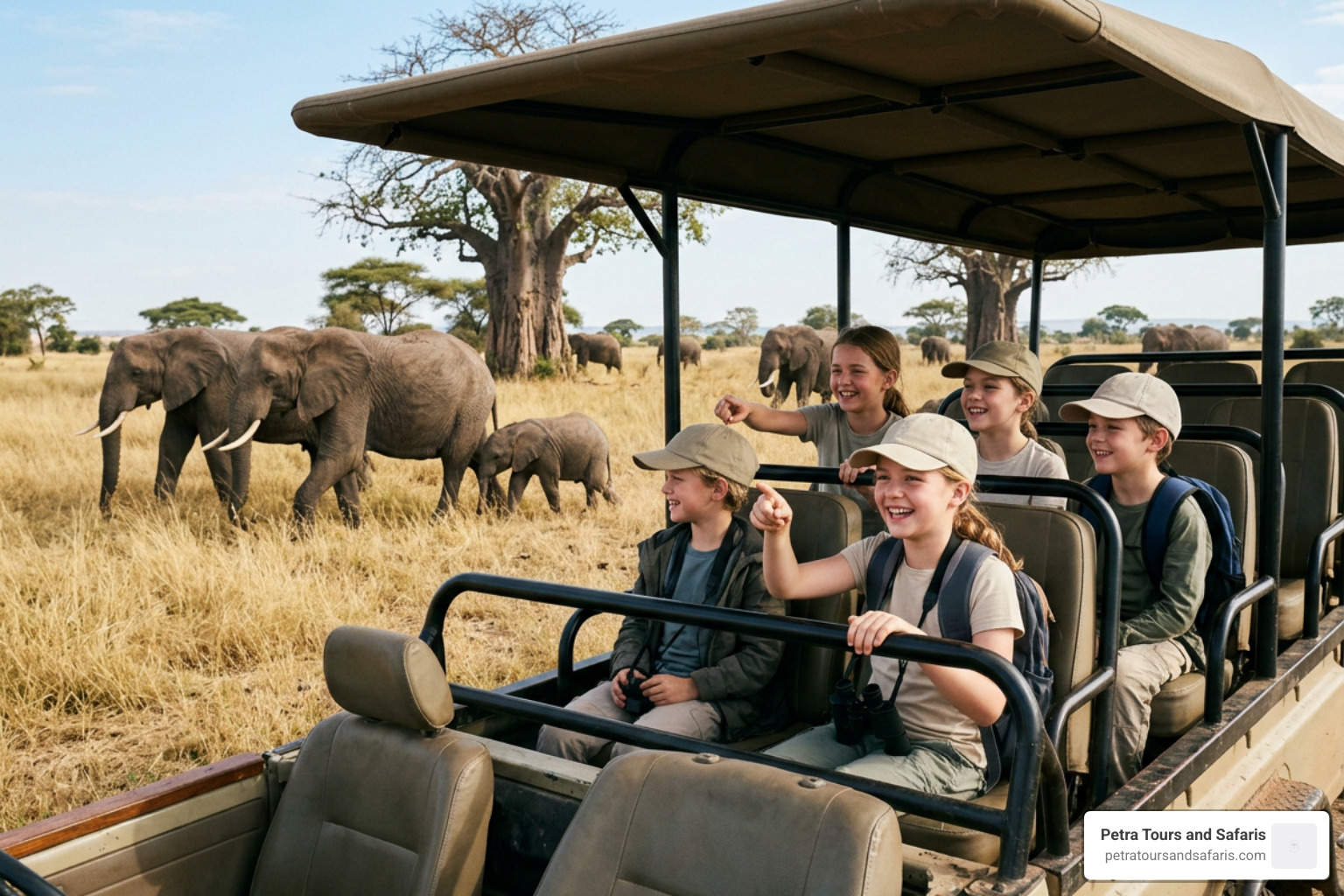
Planning a family safari in Tanzania requires selecting the right circuit, pacing daily game drives, and choosing child-friendly lodging. The world-renowned Northern Safari Circuit remains the premier choice for family travel because the parks are clustered close together, road journeys are manageable, and animal densities are among the highest on the continent. Tanzania welcomed over 1.8 million international tourists in 2023, with family groups representing one of the fastest-growing travel segments.
Top Northern Circuit Parks for Wildlife Viewing
The Northern Circuit offers a varied mix of landscapes, making every day feel like a fresh adventure for curious young minds.
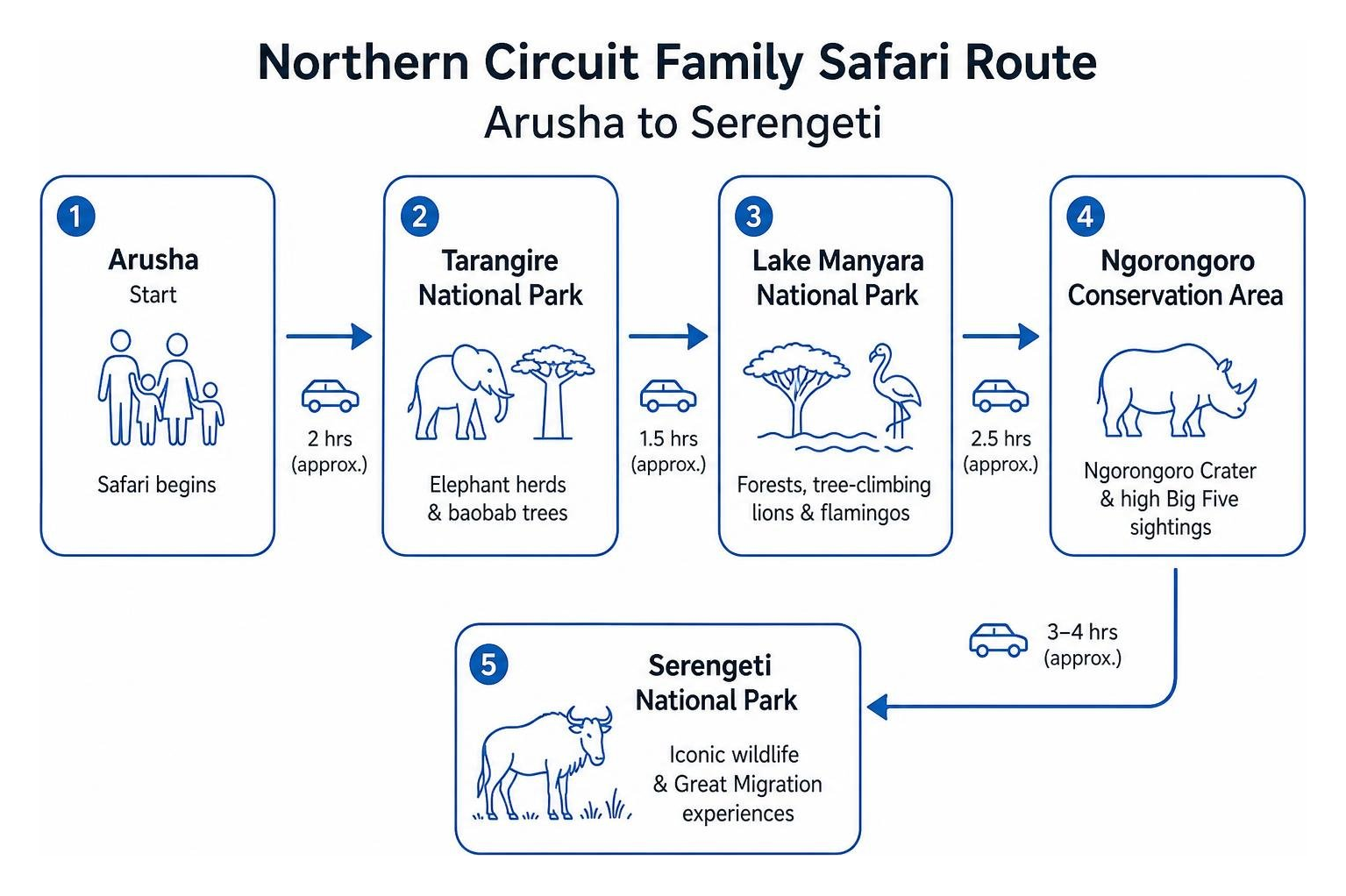
- Tarangire National Park: Often called the “Elephant Playground,” Tarangire is famous for massive elephant herds and ancient baobab trees. The park offers classic wildlife viewing just a two-hour drive from Arusha, making it a gentle introduction to the bush without long transit hours.
- Lake Manyara National Park: Nestled beneath the Great Rift Valley escarpment, Manyara features lush groundwater forests, baboon troops, tree-climbing lions, and pink flamingo flocks along the lakeshore. The park also features the Manyara Treetop Walkway, an elevated canopy walk that lets children experience the forest from high above.
- Ngorongoro Conservation Area: The Ngorongoro Crater is a self-contained wildlife paradise. Within this intact volcanic caldera, you have a high chance of spotting the entire Big Five (lion, leopard, elephant, buffalo, and black rhino) in a single morning drive. The sheer density of animals keeps younger children glued to the windows.
- Serengeti National Park: Over 350,000 family visitors explored Serengeti National Park in 2022, cementing its status as the most iconic wildlife destination on earth. From endless horizons teeming with zebras and wildebeest during the Great Migration to dramatic predator interactions around rocky kopjes, the Serengeti offers unforgettable wildlife encounters.
Combining Bush and Beach in Zanzibar
After dusty mornings and exhilarating wildlife sightings on the savanna, nothing recharges a family quite like a few days along the Indian Ocean. Zanzibar is just a short 1-hour bush flight from the Serengeti or Arusha, offering seamless connections for families.
The spice island provides calm turquoise waters, soft white sand, and water sports like snorkeling around Mnemba Atoll or dolphin watching in Kizimkazi. Parents can relax while children hunt for seashells or explore historic Stone Town, where winding alleys, spice markets, and old fortresses bring maritime history to life.
Choosing Family-Friendly Accommodations and Safety Precautions
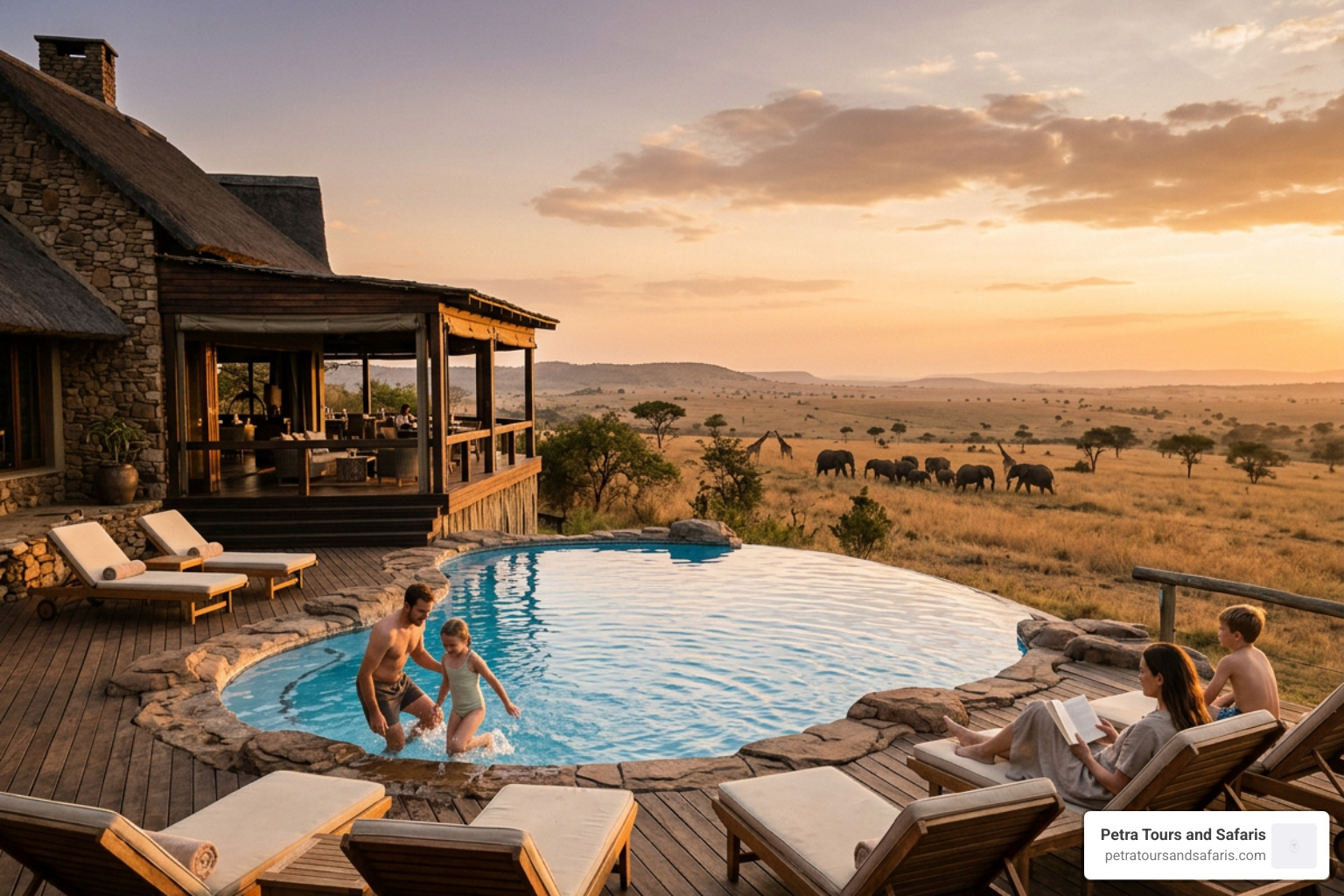
Accommodation sets the tone for your safari. Fortunately, Tanzania’s hospitality industry caters exceptionally well to family travelers, offering everything from permanent luxury lodges to authentic canvas camps.
Safari Lodges Versus Tented Camps for Children
When traveling with children, choosing the right style of accommodation involves balancing atmosphere with practical peace of mind:
- Permanent Safari Lodges: Excellent for families with toddlers and younger children. Lodges are often fenced, feature solid walls, offer large swimming pools, and provide 24/7 electricity and Wi-Fi. Many feature interconnecting family suites or multi-bedroom villas that give parents privacy while keeping children close.
- Tented Safari Camps: Ideal for families with older children (typically 8 years and older). High-end tented camps offer an authentic bush atmosphere where you fall asleep to the distant roar of lions and the calls of hyenas. Because most tented camps are unfenced, properties require children to be supervised at all times and provide dedicated Maasai night guards (askaris) to escort guests to and from their tents after sunset.
Approximately 30% of safari bookings in Tanzania are now for multi-generational family groups, up from 20% in 2019. In response, properties have added kid-friendly menus, dedicated babysitting services, and flexible dining hours to accommodate earlier bedtimes.
Essential Health and Safety Guidelines for Kids
A safe trip requires simple preparation and consistent precautions:
- Schedule a Travel Clinic Visit: Consult a pediatric travel doctor at least 6 to 8 weeks before departure. Ensure routine childhood vaccines are current and obtain advice on Yellow Fever certification and age-appropriate malaria prophylaxis.
- Prevent Insect Bites: Pack lightweight, long-sleeved clothing in neutral tones (khaki, beige, olive green). Avoid dark blue and black, which attract tsetse flies in woodland areas. Apply DEET or picaridin-based insect repellent to exposed skin during early mornings and evenings.
- Practice Vehicle Safety: Keep limbs and cameras inside the 4×4 pop-up roof vehicle while moving, and never stand on the vehicle seats.
- Follow Camp Wildlife Protocols: Treat all camps as open wilderness. Never let children walk unaccompanied after dark, do not keep snacks or open food in tents, and always obey your guide’s instructions.
- Stay Hydrated and Sun-Safe: The equatorial sun at higher elevations (such as Ngorongoro) can be deceptive. Use high-SPF sunscreen, wide-brimmed sun hats, and drink purified or bottled water provided in our vehicles.
Designing an Engaging Itinerary: Pacing, Activities, and Culture
The most common mistake when planning a safari with children is attempting to cover too much ground too quickly. Long hours spent bumping along rough roads lead to fatigue and restless kids. The ideal itinerary balances focused morning game drives with relaxed afternoons at the lodge pool.
Engaging Kids on a Family Safari in Tanzania
Over 60% of family safari operators in Tanzania now offer dedicated children’s programs, including junior ranger activities and age-appropriate game drives. Keeping younger minds engaged is easy when the wild becomes an open-air classroom:
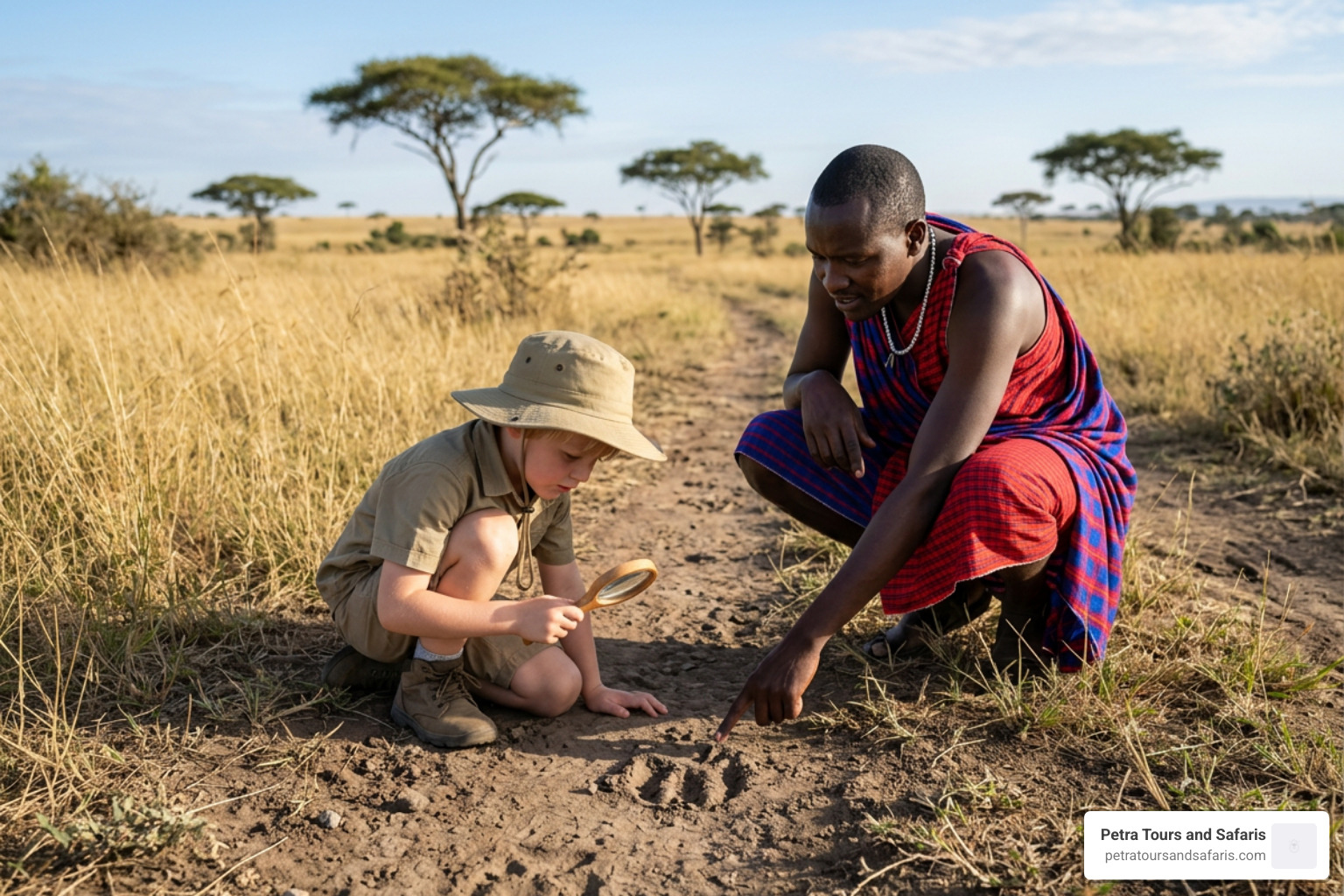
- Junior Ranger Challenges: Children learn basic animal tracking, identify dung and spoor, and practice bird calls with our guides.
- Bushcraft Survival Lessons: Guides teach kids how to make rope from wild sisal, identify medicinal trees, and start a friction fire safely.
- Safari Spotting Journals: Provide each child with a dedicated safari journal and checklist. Logging animal sightings, drawing landscapes, and stamping park entries keeps kids focused during drives.
- Dedicated Family Photography: Give children their own compact digital camera or lightweight pair of binoculars so they are active participants rather than passive observers.
Meaningful Cultural Encounters and Educational Tours
Tanzania offers deep cultural experiences that broaden worldviews and build genuine global empathy:
- Maasai Cultural Visits: Visit an authentic Maasai boma (village) to learn about traditional pastoralist life, participate in cultural jumping dances, and see how beadwork jewelry is crafted.
- Hadzabe Hunter-Gatherer Walks: Near Lake Eyasi, older kids can join the Hadzabe tribe, one of the last true hunter-gatherer communities on earth, learning primitive archery and traditional foraging skills.
- Local School Visits: Coordinate through community programs to visit rural primary schools, share stories, play soccer with local students, and donate books or stationery.
- Swahili Language Learning: Our local guides love teaching children basic Swahili phrases—like Jambo (hello), Asante sana (thank you very much), and Simba (lion)—which kids can practice throughout the journey.
Practical Planning: Best Times, Budgeting, and Age Requirements
Planning logistics well in advance guarantees smooth travel and secures the best family suites and private guides.
Seasonal Guide and Great Migration Timing
- Dry Season (June to October): The most popular time for family safaris. Wildlife viewing is exceptional as animals gather around waterholes, vegetation thins out, and mosquito numbers drop. Late July through October offers the dramatic Mara River crossings in the Northern Serengeti.
- Calving Season (January to March): An incredible window for families visiting the southern Serengeti and Ndutu plains. Over 8,000 wildebeest calves are born daily, sparking dramatic predator action in lush, green surroundings with clear, sunny skies.
- Green Season (April to May): The long rains bring dramatic skies, emerald landscapes, and significantly discounted lodge rates. While some remote seasonal camps close, major lodges remain open, offering quiet game tracks and low vehicle crowds.
Budgeting, Daily Costs, and Child Discounts on a Family Safari in Tanzania
Costs for a tailored family safari range from $500 to $1,500 per person per day depending on accommodation style, seasonal timing, and internal flights.
| Safari Tier | Estimated Cost (Per Adult/Day) | Child Rate (Ages 5–15) | Typical Accommodation Style |
|---|---|---|---|
| Mid-Range Comfort | $500 – $750 | 40% – 50% discount | Solid 4-star lodges, permanent tented suites, swimming pools |
| Luxury Safari | $800 – $1,200 | 30% – 50% discount | High-end boutique camps, private guides, spacious family villas |
| Ultra-Luxury / Private Villa | $1,300 – $2,000+ | Variable / Flat rate | Exclusive-use safari homes, private vehicle & flight charters |
Park entry fees set by TANAPA (Tanzania National Parks Authority) provide reduced entry rates for children under the age of 16, while kids under 5 enter free. Booking a private safari vehicle gives your family complete freedom to adjust game drive lengths, pause for snack breaks, or return to camp whenever energy levels dip.
Frequently Asked Questions About Family Safaris in Tanzania
What is the ideal age for children on safari?
Children aged 6 and older generally gain the most from a safari. By this age, they possess the patience needed for 3- to 4-hour game drives, can follow safety protocols around wildlife, and will retain lifelong memories of the experience. However, younger children can also travel comfortably if you book a private vehicle and choose lodges with swimming pools and secure, fenced grounds.
How long should a family safari last?
A 7- to 10-day itinerary is the sweet spot. It provides enough time to explore Tarangire, Ngorongoro, and the Serengeti without causing travel burnout. If you plan to add a beach extension in Zanzibar, allow 10 to 12 days in total for a balanced bush-and-beach holiday.
Are malaria medications necessary for children?
Yes. Most wildlife areas in Tanzania are classified as malaria risk zones. Pediatric formulations of antimalarial medications (such as pediatric atovaquone/proguanil) are widely available through travel clinics. Combining preventative medication with long sleeves, mosquito nets, and child-safe insect repellent keeps risk minimal.
Conclusion
A well-planned journey across Tanzania is more than just a holiday—it is a shared milestone that brings generations closer through wild wonders, quiet evenings beneath starlit African skies, and encounters with magnificent wildlife.
At Petra Tours and Safaris, we take pride in designing customized, responsible adventures led by experienced local guides who know how to make the savanna come alive for travelers of every age. Reach out to our team today to start tailoring your dream family safari in Tanzania and create stories your family will cherish for decades to come.


